
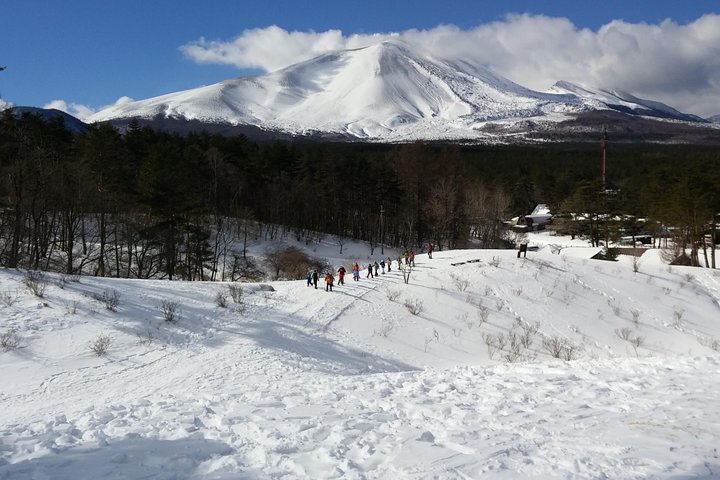
Walking the Volcano's White Collar: Snowshoeing at the Foot of Mount Asama
Snowshoe across pumice fields and forest margins beneath one of Japan’s most active volcanoes.
A raw winter light drains across the field and the mountain answers back—Mt. Asama, a jagged ridge of basalt and steam, stands like a sentinel at the edge of Nagano. Your first footprints stitch a bright line through the white: a small claim on a vast, quiet world. The air smells of cold pine and old snow. Each exhale puffs like a miniature cloud and, for a few hours, the busy parts of you fall quiet to match the landscape.
Trail Wisdom
Layer like you mean it
Dress in moisture-wicking base layers, an insulating mid-layer and a windproof shell to handle changing winter conditions.
Protect your phone batteries
Keep spare batteries and your phone in an inside pocket to prevent cold-drain during photography stops.
Watch the clock for light
Mid-morning offers balanced light and warmer temperatures; late afternoon brings dramatic color but colder conditions.
Follow guides and stay on route
Guides know safe snow corridors and wildlife-sensitive areas—stay with the group to reduce risk and disturbance.
Local Knowledge
Hidden Gems
- •Small groves where wind-carved snow forms natural sculptures
- •Quiet valley viewpoints for unimpeded views of Asama’s volcanic profile
Wildlife
Red fox, Japanese white-backed woodpecker (seasonal presence)
Conservation Note
Guides emphasize sticking to established routes to protect fragile winter vegetation and minimize disturbance to overwintering wildlife.
Mount Asama sits on an active volcanic arc and has shaped local settlement patterns and agriculture for centuries; karuizawa evolved as a seasonal resort in the late 19th century.
Seasonal Guide
spring
Best for: Early thaw photography, Birdwatching, Quieter trails
Challenges: Variable snow cover, Melt-freeze crust
Late winter into early spring can have patchy snow and softening surfaces—expect mixed conditions and brisk daytime warmth.
summer
Best for: Not applicable for snowshoeing, Hiking other trails, Wildflower viewing
Challenges: No reliable snow, Different activity offerings
This specific snowshoe tour is seasonal—summer visitors should look to hiking and alpine trails instead.
fall
Best for: Crisp air and changing colors, Fewer crowds, Transition hikes
Challenges: Early snow possible, Cooler nights
Autumn offers clear skies and cooling temperatures; snow can arrive early, so check conditions before booking snow-specific trips.
winter
Best for: Snowshoeing, Snow photography, Wildlife tracking
Challenges: Cold temperatures, Shorter daylight hours
Winter is prime season: consistent snowpack, clear mountain views and the best conditions for guided snowshoe outings.
Photographer's Notes
What to Bring
Insulated waterproof bootsEssential
Keeps feet dry and warm in snow and slush while providing traction stepping on icy patches.
GaitersEssential
Prevents snow from getting into your boots on deep drifts and when moving through soft snow.
Trekking poles with snow basketsEssential
Helps stability on uneven snow surfaces and reduces fatigue on ascents and descents.
Insulated gloves and warm hatEssential
Protects extremities from wind chill and maintains dexterity for adjusting gear and cameras.
Common Questions
How long is the tour?
Tours run between 2 and 4 hours depending on the route selected and group ability; allow extra time for transport and changing.
Do I need prior snowshoe experience?
No—beginner courses teach basic technique, but participants should be able to walk for a couple of hours and manage cold-weather conditions.
Is equipment provided?
Yes; guides typically supply snowshoes, poles and gaiters—bring your own boots and layered clothing.
Is this suitable for children or older participants?
Courses are available for a wide age range; consult the operator for private or family bookings to choose an appropriate route.
Are there avalanche risks?
The tour stays below technical avalanche terrain, but guides monitor snow conditions and adjust routes to minimize risk.
How do I get to Karuizawa?
Karuizawa is about one hour by shinkansen from Tokyo; the trailhead is a short drive from town—local operators often offer pickup details when you book.
What to Pack
Insulated water bottle (prevents freezing), warm layered clothing (temperature shifts), waterproof boots (keep feet dry), compact snacks (energy for cold-weather exertion)
Did You Know
Mount Asama is one of Honshu’s most active volcanoes and produced notable eruptions as recently as 2009.
Quick Travel Tips
Book shinkansen tickets early for weekend travel; carry cash for small local shops; verify pickup details with the operator; keep a lightweight daypack for layers and camera
Local Flavor
After the walk, warm up with handmade soba at a local eatery in Karuizawa or soak in a nearby onsen—Hoshino Onsen and the town’s cozy cafes offer a classic post-adventure ritual.
Logistics Snapshot
Closest airports: Tokyo Haneda or Narita; Shinkansen to Karuizawa ~1 hour; drive from Karuizawa town center to common trailheads 30–45 minutes; cell service patchy near upper slopes; no special permits required for guided tours.
Sustainability Note
Stay on designated routes, pack out all trash, avoid feeding wildlife and follow your guide’s instructions to protect fragile winter habitats.
Continue Reading

First Waves on the Grand Strand: Surf Lessons in Myrtle Beach
Learn to stand up on your first wave on the Grand Strand. Myrtle Beach’s gentle breaks and experienced instructors make it an ideal place for beginners to get comfortable on a board—and then explore the surf culture that grew around it.
Myrtle Beach, South Carolina

Chasing Cascades: A Half-Day Hike From Asheville to Waterfalls and Wildwoods
In four hours you can move from Asheville's streets into cathedral-like forest and the roar of mountain waterfalls. This guided half-day hike pairs scenic cascades with a certified naturalist to turn scenery into story.
Asheville, North Carolina