
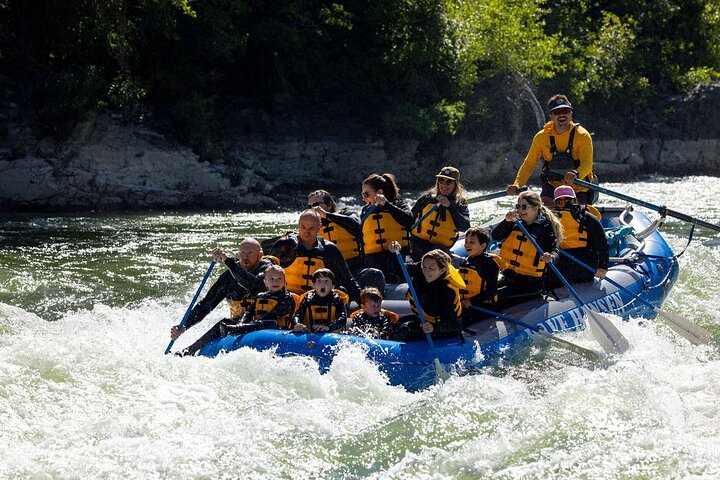
Snake River Charge: Family Whitewater on Jackson Hole’s 8-Mile Run
A family-friendly 8-mile run down the Snake River—big splashes, scenic canyon, and reliable thrills.
The raft noses into the current and the river answers—an immediate, playful shove that ripples under your palms. For four hours the Snake River alternates between conversational riffles that let you chatter and laugh, and full-throttle beats where the raft climbs, drops, and spits you out with a spray that tastes of alpine snowmelt. On the 8-mile Family Standard Raft trip out of Jackson Hole, Wyoming, the water has personality: mischievous, generous, and occasionally insistent. It dares you to lean in. Most people—kids included—answer yes.
Trail Wisdom
Dress to Get Soaked
Wear quick-dry layers and bring a lightweight splash jacket—you will get wet during Kahuna and Lunch Counter.
Secure Your Small Items
Use a provided dry bag or a chest-mounted waterproof case for phones and cameras.
Morning Launch for Calm Conditions
Book the earliest departures to avoid afternoon winds and to catch wildlife along the banks.
Hydrate and Snack Up
Bring a water bottle and a compact snack—cold river mornings and constant paddling can sap energy quickly.
Local Knowledge
Hidden Gems
- •Rowe’s Landing side channel for quiet birdwatching
- •A small pullout below Lunch Counter with views back toward the Tetons
Wildlife
Mule Deer, Osprey
Conservation Note
Local outfitters follow leave-no-trace practices; avoid feeding wildlife and pack out all trash to protect riparian zones and fish habitat.
The Snake River corridor was historically used by Shoshone peoples and later by trappers; modern conservation efforts preserved much of the valley’s riparian habitats.
Seasonal Guide
spring
Best for: High flows and lively rapids, Wildlife spotting
Challenges: Cold water temperatures, Variable weather and higher flow hazards
Spring runoff makes the river louder and faster—great for excitement but colder; wear insulating layers and heed guide briefings.
summer
Best for: Stable family-friendly flows, Warm air temperatures
Challenges: Higher crowds, Afternoon winds
Late June to August offers the most comfortable paddling temperatures and dependable flow for the standard raft run.
fall
Best for: Crisp light and autumn colors, Fewer tourists
Challenges: Cooling air and water, Shorter daylight
Fall brings quieter launches and dramatic light, but plan for colder mornings and dress in insulating layers.
winter
Best for: Off-season river perspective (not typical for rafting)
Challenges: Raft operations are usually suspended, Snow and frozen access roads
Rafting operations largely shut down in winter; consider guided snow activities instead for a river-view in cold season.
Photographer's Notes
What to Bring
Closed-toe Water ShoesEssential
Protect feet when entering/exiting the raft and against cold, rocky shorelines.
Quick-dry LayersEssential
Dry quickly after splashes and keep you comfortable in variable canyon light.
Lightweight Splash Jacket
Blocks wind and keeps you warmer during cooler mornings and spray-heavy rapids.
Waterproof Phone Case or Dry BagEssential
Protect electronics and small items from inevitable river spray.
Common Questions
How old do children need to be to join this family raft?
Minimum age policies can vary; many outfitters accept children as young as 4–6 in a family raft—check with the operator when booking.
Will I get completely soaked?
Yes—expect to get wet in the rapids; the raft is designed to hit waves and spray, so dress accordingly.
Are life jackets and helmets provided?
Yes; guides supply US Coast Guard–approved PFDs and helmets when necessary and will fit each participant before launch.
How strenuous is the trip?
Moderate—there are active paddling sections but also stretches of calm; basic fitness and the ability to follow guide commands are sufficient.
Do operators offer photos of the trip?
Many do—some outfitters include a photo package in the price while others offer images for purchase after the trip.
Is the river safe for first-time rafters?
Guided family runs are designed for novices with experienced guides managing safety; however, listen closely to safety briefings and stay attentive during rapids.
What to Pack
Waterproof phone case (protects electronics), Quick-dry layers (dries fast after splashes), Closed-toe water shoes (foot protection and traction), Reusable water bottle (stay hydrated during paddling)
Did You Know
The Snake River is the largest tributary of the Columbia River and plays a critical role in western migratory fish routes; sections of the Snake have been central to restoration and conservation efforts.
Quick Travel Tips
Book morning departures to avoid wind; reserve family raft early in summer; bring a change of clothes for after the trip; confirm age/weight requirements with the outfitter.
Local Flavor
Post-raft, head into Jackson for a beer at Snake River Brewing, grab elk or trout at a local bistro, and stroll the town square to see the iconic elk antler arches—Jackson blends western hospitality with an outdoor-food scene.
Logistics Snapshot
Closest airport: Jackson Hole Airport (JAC) / Typical drive to put-in: 10–30 minutes from town depending on outfitter / Cell service: patchy in the canyon—expect limited coverage / Permits/passes: No river permits required for commercial guided trips, but National Park or Forest fees may apply depending on launch location.
Sustainability Note
Outfitters operate under strict leave-no-trace principles; avoid single-use plastics, respect wildlife distances, and support operators who follow fuel-efficient shuttle practices.
Continue Reading

First Waves on the Grand Strand: Surf Lessons in Myrtle Beach
Learn to stand up on your first wave on the Grand Strand. Myrtle Beach’s gentle breaks and experienced instructors make it an ideal place for beginners to get comfortable on a board—and then explore the surf culture that grew around it.
Myrtle Beach, South Carolina

Chasing Cascades: A Half-Day Hike From Asheville to Waterfalls and Wildwoods
In four hours you can move from Asheville's streets into cathedral-like forest and the roar of mountain waterfalls. This guided half-day hike pairs scenic cascades with a certified naturalist to turn scenery into story.
Asheville, North Carolina