
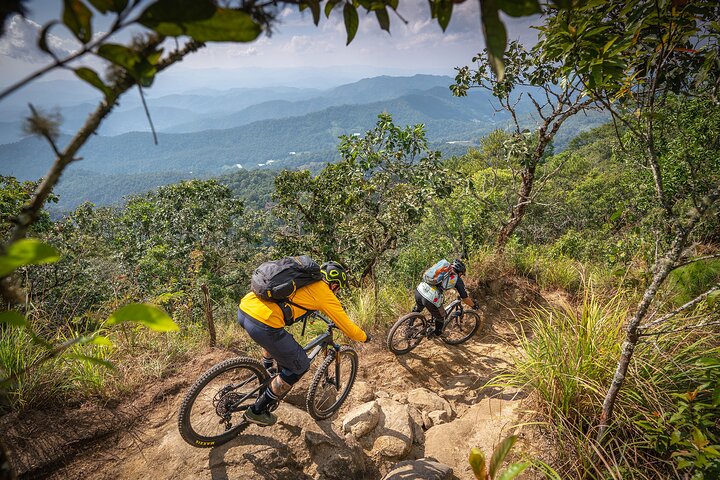
Ridge Rush: Riding the Thriller Trail Above Chiang Mai
A singletrack ascent into mountain views, village life and a thrill-packed descent outside Chiang Mai.
You start the day in the soft, cool air of Chiang Mai before the city fully wakes — a short transfer westward, and the tarmac peels away into a folding green edge. The forest leans close here; bamboo and teak press the path into shade and the mountain smells of wet earth and spice. By the time the guides lead the group past the largest Hmong village in the Doi Suthep–Pui National Park, the road gives up to singletrack. The trail doesn’t so much begin as reveal itself, a narrow ribbon that climbs and flattens, then climbs again, the jungle daring you to keep up.
Trail Wisdom
Start early
Depart Chiang Mai at first light to avoid midday heat and to catch cloud inversions on the ridge.
Tire and tube check
Bring a puncture kit and ride tires with durable sidewalls — the trail can be rooty and rocky in places.
Pace the climb
Conserve energy on the ascent; it's a long, steady effort and the downhill rewards those who arrive with fresh legs.
Respect the village
Ask before photographing locals and keep to main paths in agricultural areas to avoid trampling crops.
Local Knowledge
Hidden Gems
- •Doi Pa Klong ridge viewpoint — a quieter alternative to the popular temple vistas
- •Ban Khun Chang Khian Hmong village — traditional hill-tribe crafts and terraced vegetable plots
Wildlife
Long-tailed macaque, Great hornbill
Conservation Note
This ride traverses protected national park land — stick to marked trails, avoid single-use plastics and support local guides who follow sustainable practices.
Doi Suthep–Pui has long been a cultural and spiritual landscape: Wat Phra That Doi Suthep dates back to the 14th century, and the area has been home to Hmong and other hill-tribe communities for generations.
Seasonal Guide
spring
Best for: Wildflowers, Cool mornings
Challenges: Variable trail mud after late rains, Occasional fog reducing visibility
Spring brings moderate temperatures and blooming roadside flora, but be prepared for short rainy spells and early-morning fog.
summer
Best for: Lush green scenery, Warm weather training
Challenges: Hotter afternoons, Afternoon thunderstorms
Summer turns the forest vividly green; ride early to beat heat and watch for sudden storms that can make trails slick.
fall
Best for: Clear views, Dusty, fast trails
Challenges: Cooler nights, Post-harvest activity in villages
Autumn offers some of the clearest ridge vistas and drier trails — ideal for confident riders wanting speed.
winter
Best for: Cool, dry riding, Cloud inversions
Challenges: Chilly mornings, Limited daylight late in day
The cool, dry season is optimal: clear skies, comfortable climbing conditions and dramatic cloud layers below the ridge.
Photographer's Notes
What to Bring
Full-face or well-vented helmetEssential
Protects against falls on technical descents and offers confidence on faster sections.
Hydration pack (2–3L)Essential
Keeps water accessible on long climbs and provides space for tools and snacks.
Trail shoes with grippy solesEssential
Better pedal contact and stability when you need to dab or hike-a-bike through tricky sections.
Puncture repair kit & multi-toolEssential
Essential for roadside repairs; avoids long walks after a flat or mechanical.
Common Questions
How fit do I need to be for this tour?
You should have regular cycling experience and be comfortable with a steady climb of several hundred meters; the tour is long (6–8 hours) and rewards good endurance.
Is bike rental included?
Yes — most operators provide a mountain bike and helmet; check the specific listing for bike model and sizing details.
Are there age limits or skill requirements?
Operators typically require riders to be at least 16 and able to handle intermediate trails; novices should inquire about private or gentler options.
What happens in bad weather?
Heavy rain can make sections unsafe; guides monitor conditions and may alter the route or postpone parts of the ride for safety.
Can I bring a camera?
Yes — bring a small, secure camera or phone in a waterproof case; ask guides where to stop for photos to avoid risking a crash while shooting.
Are meals included?
Most full-day tours include a ridge lunch and snacks; confirm dietary needs with the operator ahead of time.
What to Pack
Hydration pack (2–3L) for water and snacks; puncture repair kit for roadside fixes; layered clothing for morning chill and midday heat; sunscreen and insect repellent for sun and jungle protection
Did You Know
Wat Phra That Doi Suthep, a major temple near the trailhead, was founded in 1383 and remains a significant pilgrimage site above Chiang Mai.
Quick Travel Tips
Book morning departures to avoid heat; carry cash for park fees and local purchases; wear grippy shoes rather than sandals; confirm bike sizing with the operator before arrival
Local Flavor
After a ride, head back to Chiang Mai for khao soi (northern curry noodles) and a cold local beer at a riverside gastropub; if time allows, visit the Saturday Night Market for woven Hmong textiles and hill-tribe crafts.
Logistics Snapshot
Closest airport: Chiang Mai International Airport (CNX). Typical driving time to trailhead: 30–60 minutes from central Chiang Mai. Cell service: patchy on ridges, expect good coverage near villages. Permits/fees: small national park entry fee may apply; check operator inclusions.
Sustainability Note
This tour operates inside Doi Suthep–Pui National Park — stay on designated trails, pack out all trash, and purchase snacks or crafts from village vendors to support local economies.
Continue Reading

First Waves on the Grand Strand: Surf Lessons in Myrtle Beach
Learn to stand up on your first wave on the Grand Strand. Myrtle Beach’s gentle breaks and experienced instructors make it an ideal place for beginners to get comfortable on a board—and then explore the surf culture that grew around it.
Myrtle Beach, South Carolina

Chasing Cascades: A Half-Day Hike From Asheville to Waterfalls and Wildwoods
In four hours you can move from Asheville's streets into cathedral-like forest and the roar of mountain waterfalls. This guided half-day hike pairs scenic cascades with a certified naturalist to turn scenery into story.
Asheville, North Carolina