
Paddling with Gentle Giants: Kayaking the Dos Hermanos Lagoon
1 hour rental — paddle a city lagoon for wildlife and calm water
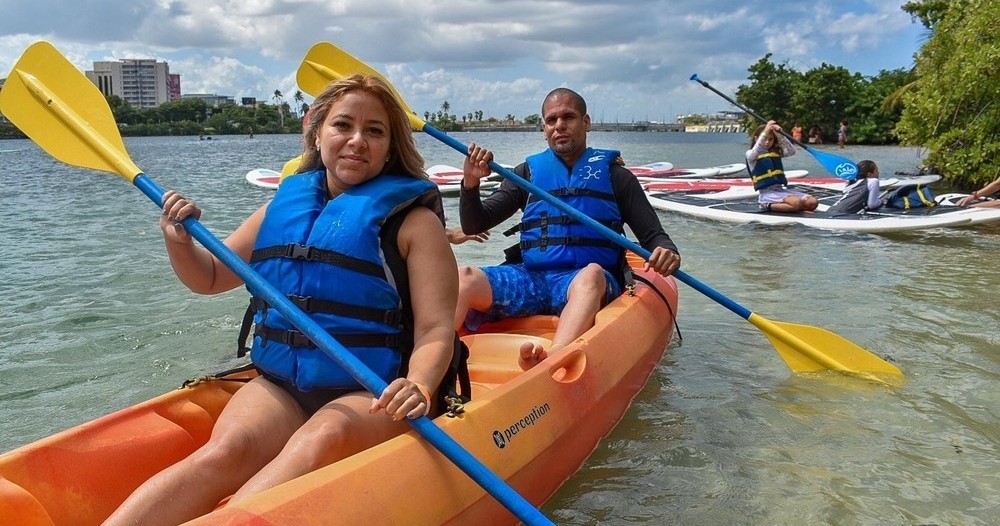
The sun slants between the arches of Dos Hermanos Bridge and the Condado lagoon hisses awake like a living map: a patchwork of seagrass, shimmered water, and shadowed reefs. You push off from the sandy edge in a tandem kayak and the city recedes to a frame — high-rise hotels and traffic softened by the lagoon’s hush. Ahead, the water lays itself out in green and blue and something larger moves beneath, deliberate and slow. It’s a manatee, nose up for air, indifferent to the world and entirely present in the moment.
Trail Wisdom
Go early for calm water
Book the first available slot to increase chances of smooth water and better wildlife sightings.
Use reef-safe sunscreen
Protect your skin and the lagoon’s fragile seagrass and reef ecosystems by choosing reef-safe formulas.
Respect wildlife distance
Manatees are protected — observe from a distance and never attempt to touch or feed them.
Pack a dry bag
Keep your phone, keys, and snacks dry in a small waterproof bag — easy to store in a double kayak.
Local Knowledge
Hidden Gems
- •Paddle close to the artificial reef tiles to spot small reef fish
- •Stroll to La Placita de Santurce after your paddle for local snacks and a lively neighborhood atmosphere
Wildlife
West Indian manatee, Great blue heron
Conservation Note
Manatees in Puerto Rico are protected under U.S. conservation law — keep distance and use reef-safe products to reduce harm to seagrass beds.
The Condado lagoon has long been an intersection of urban development and coastal ecosystems; the area’s bridges and promenades grew with San Juan’s 20th-century expansion.
Seasonal Guide
spring
Best for: Dry weather, Calm morning paddles
Challenges: Occasional rain showers, Increased visitor traffic around holidays
Late spring brings warm water and generally calm mornings; plan around holiday weekends for fewer people.
summer
Best for: Warmest water, Early-morning wildlife viewing
Challenges: Afternoon thunderstorms, Stronger midday sun
Summer is hot and humid with afternoon storms possible; aim for morning slots and hydrate well.
fall
Best for: Lower visitor numbers, Warm sea temperatures
Challenges: Hurricane season peak months (Sept-Oct), Occasional choppy days
Early fall can be quiet and warm, but keep an eye on tropical weather forecasts during hurricane season.
winter
Best for: Calm seas, Clear skies and dry conditions
Challenges: Higher demand during peak tourist season, Cooler mornings
The dry season (Dec–Apr) offers some of the most reliable paddling conditions and clearer skies.
Photographer's Notes
What to Bring
Water shoesEssential
Protect feet when launching and exiting; surfaces can be rocky or slick.
Reef-safe sunscreenEssential
Reduces environmental impact and protects skin during daytime paddles.
Dry bag (small)Essential
Keeps phone, keys, and snacks dry in the kayak.
Reusable water bottleEssential
Staying hydrated is easy and eco-friendly—refill before you launch.
Common Questions
How long is the rental?
The standard double kayak rental is one hour and includes a brief lesson, paddles, and life jackets.
What are the weight limits?
Double kayaks have a maximum combined weight of 350 lbs; single kayaks and larger options have different limits—check when booking.
Will I see manatees?
Manatee sightings are common but not guaranteed; early morning sessions increase the chance of encounters.
Do I need prior kayaking experience?
No—guided lessons are provided and the water is sheltered, making it beginner-friendly.
Are children allowed?
Yes; kids can ride in appropriate kayaks but must fit within the posted weight limits—ask the operator about child seating and life jackets.
How do I book or cancel?
Reservations are made through the operator’s booking page; cancellation policies vary, so review terms when you book.
What to Pack
Water shoes (protect launch/exit); reef-safe sunscreen (protect skin and seagrass); dry bag (keep essentials dry); reusable water bottle (stay hydrated)
Did You Know
The West Indian manatee (Trichechus manatus) is a protected species in Puerto Rico and is often seen in coastal lagoons like the one near Dos Hermanos Bridge.
Quick Travel Tips
Book morning slots for calmer water; arrive 15 minutes early for the safety briefing; wear a swim layer under lightweight clothing; carry a small tip for your guide
Local Flavor
After your paddle, head to Condado for seaside cafés or drive to Old San Juan for a piña colada at Barrachina; for a local evening scene, La Placita de Santurce serves small plates and music.
Logistics Snapshot
Closest airport: Luis Muñoz Marín International Airport (SJU) / Launch point: Av. Ashford by Condado Plaza Hilton / Driving from SJU: ~10–20 minutes (5–7 miles) / Cell: reliable in Condado / Permits: none required
Sustainability Note
This lagoon supports seagrass and manatee habitat — use reef-safe sunscreen, keep a respectful distance from wildlife, and pack out all trash to protect fragile coastal ecosystems.
Continue Reading

First Waves on the Grand Strand: Surf Lessons in Myrtle Beach
Learn to stand up on your first wave on the Grand Strand. Myrtle Beach’s gentle breaks and experienced instructors make it an ideal place for beginners to get comfortable on a board—and then explore the surf culture that grew around it.
Myrtle Beach, South Carolina

Chasing Cascades: A Half-Day Hike From Asheville to Waterfalls and Wildwoods
In four hours you can move from Asheville's streets into cathedral-like forest and the roar of mountain waterfalls. This guided half-day hike pairs scenic cascades with a certified naturalist to turn scenery into story.
Asheville, North Carolina