
From Redrock Rims to River Calm: A Moab Rappelling + SUP Day
Two contrasting terrains, one unforgettable day — learn ropes in the shade, paddle calm in the sun.
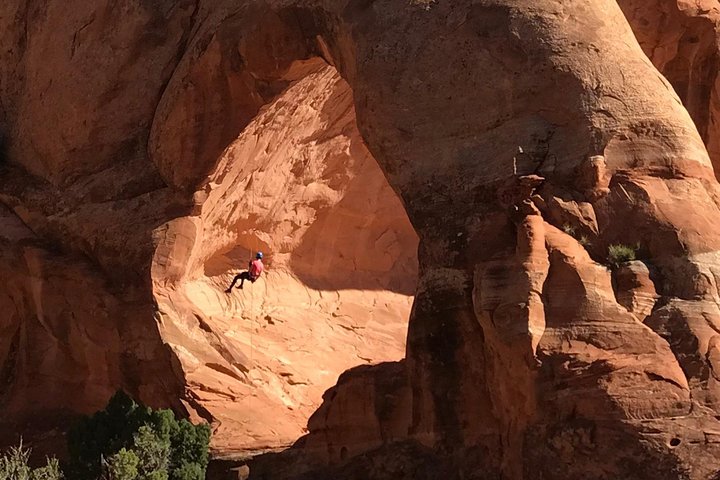
The morning sunlight carves itself across sandstone like a slow-moving blade. You stand at the lip of a narrow slot, gravity humming at the end of your rope and the canyon breathing beneath you — patient, ancient, and a little mischievous. That first rappel drops you beside a natural arch, wind teasing loose sand from the ledges. By noon you trade harness for leash and board, pushing off into the Colorado River where towering canyon walls lean in as if to eavesdrop. The river slides you quietly downstream, current nudging the board like a kindly hand.
Trail Wisdom
Hydrate Early
Start with at least 1 liter of water and plan to drink often — desert air and exertion dehydrate quickly.
Bring Grippy Shoes
Closed-toe shoes with sticky rubber soles keep you secure on slickrock and during rappels.
Layer for Quick Changes
Mornings can be cool; bring a light wind or fleece layer you can shed before paddling.
Lock Down Gear
Use a leash for your SUP and secure cameras in a floating case when on the river.
Local Knowledge
Hidden Gems
- •Sunset views near the Colorado River Islands that fewer visitors reach
- •A short walk to lesser-known petroglyph panels on public BLM land
Wildlife
Desert bighorn sheep, Great blue heron on river bends
Conservation Note
Stick to established approaches and put gear down only on durable rock; avoid trampling cryptobiotic soil and pack out all trash to protect fragile desert ecosystems.
This region of the Colorado Plateau preserves millennia of human history from ancestral Puebloan presence to historic ranching and modern recreation economies.
Seasonal Guide
spring
Best for: Moderate temperatures, Wildflower and redrock contrast
Challenges: Occasional spring runoff, Busy weekends
Spring (March–May) is ideal for mild temps and high-contrast color; plan early bookings for weekends.
summer
Best for: Long days, Warm water paddling
Challenges: High heat and UV, Flash flood potential in narrow slots
Summer brings hot afternoons — schedule early starts and carry ample water and sun protection.
fall
Best for: Stable weather, Fewer crowds
Challenges: Cooler mornings, Shorter daylight hours
Fall offers consistent conditions and smaller groups; bring a light insulating layer for mornings.
winter
Best for: Crisp vistas, Solitude
Challenges: Cold river temps, Occasional icy patches on rock
Winter can be quiet and beautiful but requires thicker layers and awareness of cold-water exposure.
Photographer's Notes
What to Bring
Hydration Pack or 1–2L Water BottleEssential
Staying hydrated is critical in the desert and during sustained exertion.
Closed-Toe, Sticky Rubber ShoesEssential
Secure footing on slickrock and during rappels prevents slips and ankle injuries.
Quick-Dry Clothing & Light FleeceEssential
Layering helps you shift from cool mornings to warm afternoons and wet conditions on the river.
Sunscreen, Lip Balm, and Sun HatEssential
High UV on the plateau requires reliable sun protection for skin and eyes.
Common Questions
Do I need prior rappelling or SUP experience?
No — guides provide instruction and gear for first-timers; basic mobility and comfort with heights are recommended.
What age is appropriate for this trip?
Trips are family-friendly; minimum ages vary by operator but children 8+ are commonly accommodated with tandem guidance.
What should I wear?
Quick-dry layers, closed-toe shoes with good grip, and a sun hat; bring a light fleece for mornings.
Is this activity safe for pregnant travelers?
Pregnancy presents additional risks for both rappelling and paddling — consult your physician and inform the operator before booking.
Are restrooms available during the trip?
Operators typically have a mid-day stop with basic facilities or portable options; plan bathroom breaks before the canyon portion.
What is the cancellation policy?
Many operators offer free cancellation up to a set time; this specific tour lists free cancellation — confirm current terms on the booking page.
What to Pack
Hydration (2L) for desert exertion; Closed-toe shoes with sticky soles for slickrock; Quick-dry clothing and light insulation for changing temps; Sunscreen and a hat for intense UV.
Did You Know
Arches National Park, a short drive from Moab, contains more than 2,000 natural stone arches — testament to the erosional processes that shape the region’s sandstone formations.
Quick Travel Tips
Book your guided combo early in shoulder seasons; bring cash/cards for tips and small purchases; rent gear in town if you don’t own it; expect limited cell service in narrow canyons.
Local Flavor
After the trip, head to Moab Brewery for a relaxed post-adventure pint and wood-fired pizza, or try Desert Bistro for a heartier, locally sourced meal. Stroll Main Street for outfitters, artisan shops, and riverfront viewpoints to wind down.
Logistics Snapshot
Closest airport: Canyonlands Regional Airport (CNY) ~30 minutes; Driving distance from Moab center: 10–30 minutes to meeting point; Cell service: intermittent in canyons; Permits/passes: none required for guided trips though some access points are on BLM-managed land — confirm with operator.
Sustainability Note
This river corridor and surrounding public lands are ecologically sensitive — pack out all trash, avoid walking on cryptobiotic soil, and rinse gear to prevent spreading invasive species.
Continue Reading

First Waves on the Grand Strand: Surf Lessons in Myrtle Beach
Learn to stand up on your first wave on the Grand Strand. Myrtle Beach’s gentle breaks and experienced instructors make it an ideal place for beginners to get comfortable on a board—and then explore the surf culture that grew around it.
Myrtle Beach, South Carolina

Chasing Cascades: A Half-Day Hike From Asheville to Waterfalls and Wildwoods
In four hours you can move from Asheville's streets into cathedral-like forest and the roar of mountain waterfalls. This guided half-day hike pairs scenic cascades with a certified naturalist to turn scenery into story.
Asheville, North Carolina