
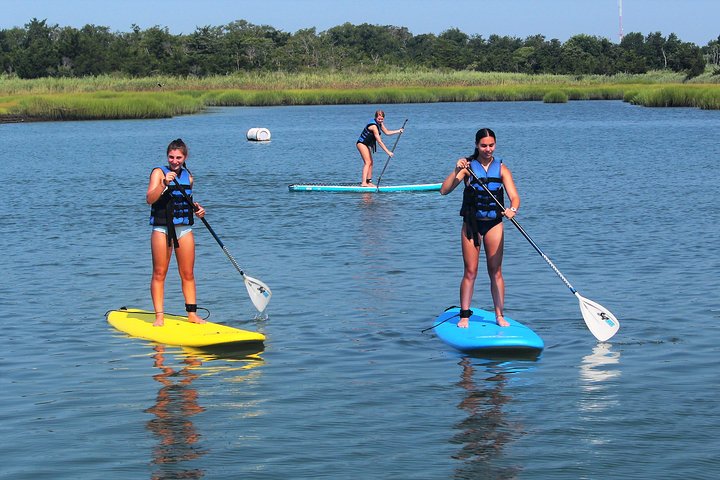
Flatwater Freedom: Paddleboarding Cape Island Creek in Cape May
A peaceful hour on Cape Island Creek where birds, tide, and coastline converge for easy, wildlife-rich paddling
The creek takes you slowly. At first it’s a silver ribbon threaded between marsh grass and clapboard houses, the water so calm it mirrors the blue of the sky. A distant gull gives a plaintive call. You push off and the board answers: a steady glide, a gentle whoosh. Osprey circle above like weather vanes, talons tucked, then stall and dive with the graceful brutality of a fishing ballet. For an hour, the world compresses to paddle, board, breath—and the small, intimate theater of Cape Island Creek.
Trail Wisdom
Check the tide
Tides influence current and depth—plan an outgoing or incoming tide to match your comfort and route.
Wear a PFD
Even on calm water, a life jacket improves safety and confidence; many rentals provide them but confirm beforehand.
Sun and wind timing
Launch in the morning for flatter water and softer light; avoid late-afternoon onshore winds that can chop up the creek.
Respect nesting birds
Keep 50–100 feet from osprey nests and avoid sudden movements—disturbance can blunt breeding success.
Local Knowledge
Hidden Gems
- •Quiet side channels where reflections create near-mirror surfaces
- •Early-morning marsh meadows where migrating shorebirds feed
Wildlife
Osprey, Great Blue Heron
Conservation Note
The marshes are sensitive habitats—keep a respectful distance from wildlife, avoid trampling vegetation, and use biodegradable sun products.
Cape May is one of the United States’ oldest seaside resort towns, with Victorian-era architecture and a long tradition of coastal tourism.
Seasonal Guide
spring
Best for: Bird migration viewing, Quiet water paddles
Challenges: Unpredictable winds, Cooler water temperatures
Spring brings migration and active birdlife; dress in layers and be ready for variable weather.
summer
Best for: Warm-water paddling, Family outings
Challenges: Higher crowds, Heat and sun exposure
Summer is optimal for warm, calm conditions but peak season means more people on the water.
fall
Best for: Late migratory flocks, Golden light photography
Challenges: Cooling temperatures, Shorter daylight hours
Fall offers dramatic bird movements and crisp air—pack a wind layer and plan for earlier sunsets.
winter
Best for: Brisk, empty-water outings, Off-season bird observation
Challenges: Cold air and water, Limited rental availability
Winters are quiet and colder; check rental hours and bring cold-weather gear if you go.
Photographer's Notes
What to Bring
PFD (life jacket)Essential
Provides safety and confidence on the water; often mandatory for rentals.
LeashEssential
Keeps you attached to your board in the event of a fall—useful in current or wind.
Waterproof phone case or dry bagEssential
Protects electronics and documents from splashes and accidental drops.
Biodegradable sunscreen and hat
Sun protection is essential on reflective water surfaces; choose eco-friendly products.
Common Questions
Do I need prior paddleboarding experience?
No—most rentals accommodate beginners with a quick safety and technique briefing; the sheltered creek makes it beginner-friendly.
How long is a typical rental session?
The bookable session is 60 minutes, which is enough time to explore the creek at a relaxed pace.
Is a life jacket provided?
Rental operators typically provide PFDs; confirm when booking and bring your own if you prefer a personal fit.
Are children allowed on the boards?
Yes—children can ride tandem with an adult or on-site tandem boards are sometimes available; check age and weight limits with the operator.
What should I do if the weather turns bad?
Operators monitor conditions and will advise returns; if you’re already on the water, paddle to the nearest shore and stay low until conditions improve.
Will I see wildlife?
Yes—expect ospreys, herons, egrets, and other marsh birds; sightings aren’t guaranteed, but the area is a well-known birding hotspot.
What to Pack
PFD (provided or personal) for safety; Waterproof bag for phone and keys; Sun protection (hat, sunscreen) due to reflective water; Water bottle to stay hydrated
Did You Know
Cape May is one of North America’s premier bird migration hotspots and hosts the Cape May Bird Observatory, which has monitored migrations since the 1970s.
Quick Travel Tips
Book morning slots for calmer water; Bring a change of clothes—spray and splashes are likely; Confirm PFD and board size with the operator before arrival; Check local wind forecasts and tides the day before
Local Flavor
After your paddle, walk Washington Street Mall for ice cream and shops, or head to a waterfront spot like The Lobster House for fresh seafood; Cape May Brewery and several local taverns offer relaxed post-paddle beers.
Logistics Snapshot
Closest airports: Atlantic City (ACY) ~45 min, Philadelphia (PHL) ~90 min; Typical driving distance from Cape May town center: under 10 minutes to the creek; Cell service: intermittent in marshier channels; Permits: none for casual rentals—operator provides launch access and safety briefing.
Sustainability Note
This creek borders sensitive marsh habitats—pack out all trash, use biodegradable sunscreen, keep distance from nesting birds, and avoid launching in areas with dense vegetation to prevent erosion.
Continue Reading

First Waves on the Grand Strand: Surf Lessons in Myrtle Beach
Learn to stand up on your first wave on the Grand Strand. Myrtle Beach’s gentle breaks and experienced instructors make it an ideal place for beginners to get comfortable on a board—and then explore the surf culture that grew around it.
Myrtle Beach, South Carolina

Chasing Cascades: A Half-Day Hike From Asheville to Waterfalls and Wildwoods
In four hours you can move from Asheville's streets into cathedral-like forest and the roar of mountain waterfalls. This guided half-day hike pairs scenic cascades with a certified naturalist to turn scenery into story.
Asheville, North Carolina