
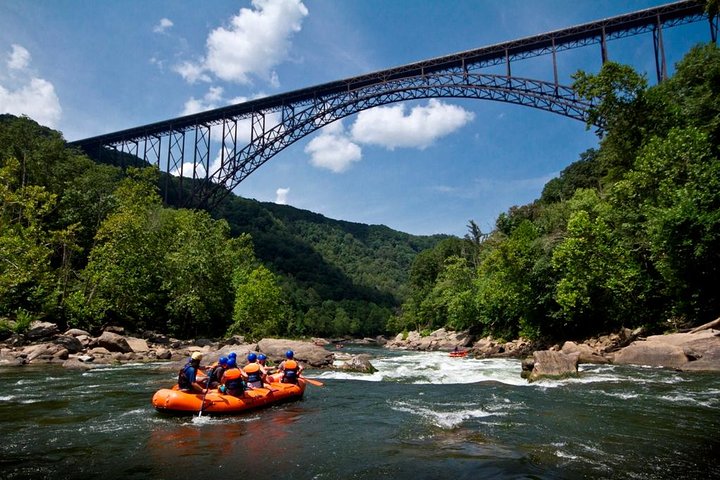
Dancing the Rapids: Lower New River Whitewater Rafting Trip
Five hours riding one of America’s oldest rivers — class I–V thrills framed by Appalachian cliffs.
You feel the first slap of spray before you hear the roar. The raft shudders against a throat of whitewater and the New River—never content, always in motion—pulls at the bow as if testing your resolve. Around you the canyon walls close in: sandstone ribs scored by eons of water, a patchwork of green where oaks and hemlocks grip thin soils. For five hours this river will be both playmate and taskmaster, daring you into over 25 rapids that range from easy, rollicking waves to teeth-clenching Class V drops.
Trail Wisdom
Wear Secure Footwear
Closed-toe river shoes with a good sole protect toes and provide traction on slippery put-ins and exits.
Hydrate Before You Go
Bring a water bottle and drink well before launch—exercise plus sun and adrenaline dehydrate quickly.
Listen to Your Guide
Guides make quick safety calls; following instructions is the best way to stay in the raft and enjoy the run.
Protect Electronics
Use a waterproof case or dry bag with a lanyard—phone photos are worth protecting when the river spits spray.
Local Knowledge
Hidden Gems
- •Quiet eddies below major rapids that make excellent lunchtime swimming spots
- •Short rim trails above the gorge for sunrise views away from the crowds
Wildlife
Great blue heron, White-tailed deer
Conservation Note
The New River Gorge is now a national park and preserve; operators and visitors are encouraged to minimize impact, follow leave-no-trace principles, and support local conservation initiatives.
The New River corridor was a center for coal and rail industry activity; remnants of mining-era infrastructure dot the banks and inform local culture.
Seasonal Guide
spring
Best for: High-flow rapids, Landscape renewal, Wildlife viewing
Challenges: Cold water temps, Unpredictable weather, Stronger currents
Spring brings higher flows and more technical rapids—expect fast water and full-throttle runs, suitable for those seeking excitement.
summer
Best for: Warmer air, Family trips, Calmer pools
Challenges: Lower flows on dry years, Crowds on weekends, Hot sun
Summer offers warmer weather and comfortable pools between rapids, making it great for families and mixed-ability groups.
fall
Best for: Colorful foliage, Steady flows, Photogenic light
Challenges: Cooler mornings, Shorter daylight, Variable water levels
Fall combines steady flows and vivid colors, producing scenic runs and crisp air—ideal for photographers and hikers alike.
winter
Best for: Off-season solitude, Lower visitor numbers, Planning future trips
Challenges: Cold conditions, Many outfitters closed, Icy access points
Winter is quiet and cooler; commercial trips are limited—use it to plan the season ahead or book a spring excursion.
Photographer's Notes
What to Bring
Closed-toe River ShoesEssential
Protect feet on rocky shores and provide grip during wet entries and exits.
Quick-dry ClothingEssential
Moisture-wicking layers keep you comfortable when you’re wet and wind-exposed.
Waterproof Phone Case / Dry BagEssential
Keeps electronics dry and accessible for photos and emergency contact.
Sunscreen and Sunglasses with StrapEssential
Sun reflects off the water and canyon walls; eye and skin protection are essential.
Common Questions
How long is the rafting trip?
The experience is approximately five hours total, including safety briefings, rafting segments, and a riverside lunch.
What rapids will we encounter?
The Lower New has over 25 rapids rated from Class I to V; your guide will navigate the section appropriate to river level while keeping safety top of mind.
Is previous rafting experience required?
No—this trip is guide-led and appropriate for first-timers as well as repeat paddlers; basic swimming comfort is recommended.
What’s included in the price?
Equipment (life jacket, helmet), a riverside lunch, and guide services are included; check with the operator for specific extras.
How many people per raft?
Rafts hold a maximum of eight guests and require at least two guests to book.
What if the water level is too low or high?
Operators monitor conditions and will adjust the route or reschedule if flows make the trip unsafe; refunds or rebooking policies depend on the operator and the listed free cancellation terms.
What to Pack
Quick-dry layers (stay warm when wet); closed-toe river shoes (protect feet and improve grip); sunscreen and sunglasses with strap (UV protection and glare reduction); waterproof phone case or dry bag (protect electronics and ID).
Did You Know
The New River is considered one of the oldest rivers in North America—geologists estimate parts of its course predate the Appalachian Mountains—and it flows generally north, cutting a deep gorge through ancient sandstone.
Quick Travel Tips
Arrive early for parking and check-in; bring cash for local tips and purchases; expect spotty cell service in the gorge; book weekdays for smaller groups and better availability.
Local Flavor
After the trip, head to nearby Fayetteville or Hinton for Appalachian comfort food and craft beer; try a regional pepperoni roll and visit a local visitor center or small museum to learn more about coal-era history and river culture.
Logistics Snapshot
Closest major airport: Yeager Airport (CRW) in Charleston, ~1–1.5 hours drive; Nearest town/launch: Hinton, WV; Driving distance from nearest town: typically under 30 minutes from local outfitters; Cell service: intermittent in the gorge; Permits/passes: no personal permits required for guided commercial trips—confirm with operator.
Sustainability Note
The New River Gorge is part of a national park and preserve—pack out all trash, avoid disturbing shoreline habitats, and support outfitters who practice river stewardship and proper waste disposal.
Continue Reading

First Waves on the Grand Strand: Surf Lessons in Myrtle Beach
Learn to stand up on your first wave on the Grand Strand. Myrtle Beach’s gentle breaks and experienced instructors make it an ideal place for beginners to get comfortable on a board—and then explore the surf culture that grew around it.
Myrtle Beach, South Carolina

Chasing Cascades: A Half-Day Hike From Asheville to Waterfalls and Wildwoods
In four hours you can move from Asheville's streets into cathedral-like forest and the roar of mountain waterfalls. This guided half-day hike pairs scenic cascades with a certified naturalist to turn scenery into story.
Asheville, North Carolina