
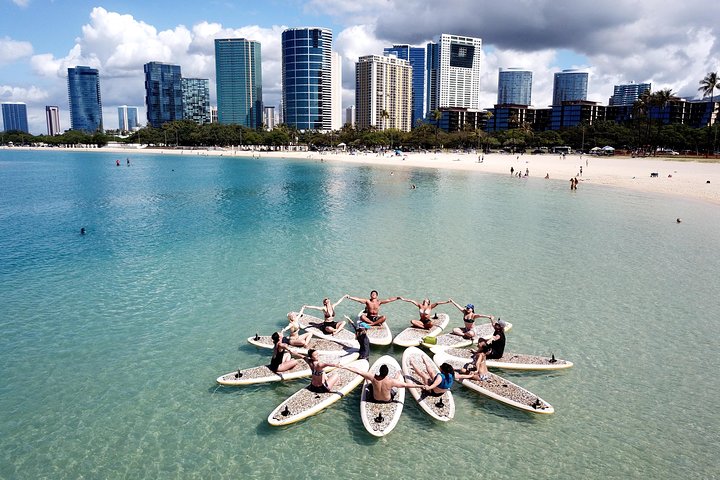
Balance on Blue: Paddleboard Yoga in Honolulu’s Calm Morning Seas
Morning breath, ocean rhythm — learn to balance on the Pacific with a Waikiki twist
You push off from the sand before sunrise and the city is still half-asleep — streetlights dim, traffic a distant hum — while the ocean opens like a patient, listening audience. Your paddleboard skims a mirror of pastel sky; the instructor’s voice is steady but low, guiding breath and slow movement. When you lie back for savasana, the Pacific rocks you with a deliberate, unhurried rhythm, fingers trailing through warm water. It’s strange and precise: you are practicing yoga and a kind of ocean literacy at the same time.
Trail Wisdom
Book a morning slot
Calmer water and lighter winds in the early morning make standing poses and photos easier.
Wear reef-safe sunscreen
Protect both your skin and the coral by choosing mineral-based, reef-safe formulas.
Bring a waterproof phone case
You’ll want at least a few frames from water level; a case keeps shots safe and hands free.
Listen to your instructor about currents
Instructors know local wind and tide patterns — follow their routing to avoid strong rip currents or boat traffic.
Local Knowledge
Hidden Gems
- •Kapiolani Park shoreline just east of Waikiki — a quieter launch spot with views of Diamond Head
- •Magic Island at Ala Moana Beach Park — a calm lagoon popular for post-class swims
Wildlife
Green sea turtles (honu) occasionally in nearshore waters, Tropical reef fish like surgeonfish and butterflyfish in shallow reef areas
Conservation Note
Use reef-safe sunscreen, avoid standing on coral, and follow local guidance — many operators are active in shoreline cleanups and reef protection efforts.
Stand-up paddling has roots in Polynesian voyaging and was popularized in Waikiki during the 20th century by surf instructors and beach boys who used long boards for instruction and sightseeing.
Seasonal Guide
spring
Best for: Moderate temperatures, Fewer tourists, Calmer mornings
Challenges: Occasional trade winds, Uneven water mornings
Spring offers comfortable air and sea temps with moderate crowds; watch for trade wind afternoons that can kick up choppiness.
summer
Best for: Warmest water, Consistently calm bays, Long daylight hours
Challenges: Higher humidity, Peak visitor season, More boat traffic midday
Summer delivers warm, inviting water and stable conditions for beginners — aim for sunrise to avoid mid-morning traffic.
fall
Best for: Still-warm water, Fewer crowds than summer, Good visibility
Challenges: Occasional squalls, Variable surf outside protected bays
Fall keeps pleasant sea temperatures and often quieter beaches; be prepared for occasional early storms.
winter
Best for: Dramatic surf off-shore, Better for experienced paddlers, Clear air on calm days
Challenges: Strong winter swells, Choppier conditions on exposed beaches
Winter brings big surf to exposed shores; stick to sheltered bays for SUP yoga, and expect cooler mornings.
Photographer's Notes
What to Bring
Reef-safe sunscreenEssential
Protects skin and the marine ecosystem — required by many local operators.
Lightweight rashguard or long-sleeve topEssential
Provides sun protection and dries quickly after splashes.
PFD (life vest)Essential
Often provided, but required for safety — ask your operator for fit and style.
Water shoes or reef-safe sandals
Protect feet on rocky shore entries and provide traction when climbing back onto the board.
Common Questions
Do I need prior SUP or yoga experience to join?
No — classes are designed for all levels with instructors providing beginner-friendly modifications; basic mobility and comfort in the water are helpful.
What should I bring to class?
Bring a swimsuit or quick-dry clothing, reef-safe sunscreen, a towel, and a reusable water bottle; most outfits supply boards, paddles, and PFDs.
Are the classes safe for non-swimmers?
Operators supply PFDs and stay close to participants; non-swimmers should disclose this when booking and may be required to stay in shallower, calmer areas.
How early should I arrive?
Arrive 20–30 minutes early to sign waivers, get fitted for gear, and receive a safety briefing.
What happens if the ocean is rough?
Instructors will modify the session, move into a more sheltered spot, or cancel and offer rescheduling or refund if conditions are unsafe.
Can I take photos during class?
Yes — use a waterproof case and stay mindful of the lesson flow; instructors may pause for quick group shots on calm days.
What to Pack
Reef-safe sunscreen (protects skin and reefs), Lightweight rashguard (sun protection and quick drying), Water shoes (shore entries and traction), Reusable water bottle (stay hydrated)
Did You Know
Modern stand-up paddleboarding was popularized in Waikiki in the mid-20th century and draws on much older Polynesian paddling traditions.
Quick Travel Tips
Arrive 20–30 minutes early to check in; choose sunrise sessions for calm water and light; wear reef-safe sunscreen and a hat; confirm gear is provided when booking.
Local Flavor
After class, walk the Waikiki promenade for fresh poke or shave ice, grab a Mai Tai or seafood plate at Duke’s Waikiki for beachfront dining, or head into Kakaʻako for craft breweries and casual Hawaiian fusion eateries.
Logistics Snapshot
Closest airport: Daniel K. Inouye International Airport (HNL); Driving distance to Waikiki ~12 miles / 20–30 minutes; Cell service: typically good along the shoreline; Permits/passes: none usually required for participants — operator manages launch permissions.
Sustainability Note
This activity depends on healthy reef ecosystems — choose operators that use reef-safe sunscreen policies, brief guests on coral protection, and participate in local conservation efforts.
Continue Reading

First Waves on the Grand Strand: Surf Lessons in Myrtle Beach
Learn to stand up on your first wave on the Grand Strand. Myrtle Beach’s gentle breaks and experienced instructors make it an ideal place for beginners to get comfortable on a board—and then explore the surf culture that grew around it.
Myrtle Beach, South Carolina

Chasing Cascades: A Half-Day Hike From Asheville to Waterfalls and Wildwoods
In four hours you can move from Asheville's streets into cathedral-like forest and the roar of mountain waterfalls. This guided half-day hike pairs scenic cascades with a certified naturalist to turn scenery into story.
Asheville, North Carolina